Tech
Twenty years of phones: from a Walkman to a folding computer
14 July 2026 · Yash Gokhale · 11 min read
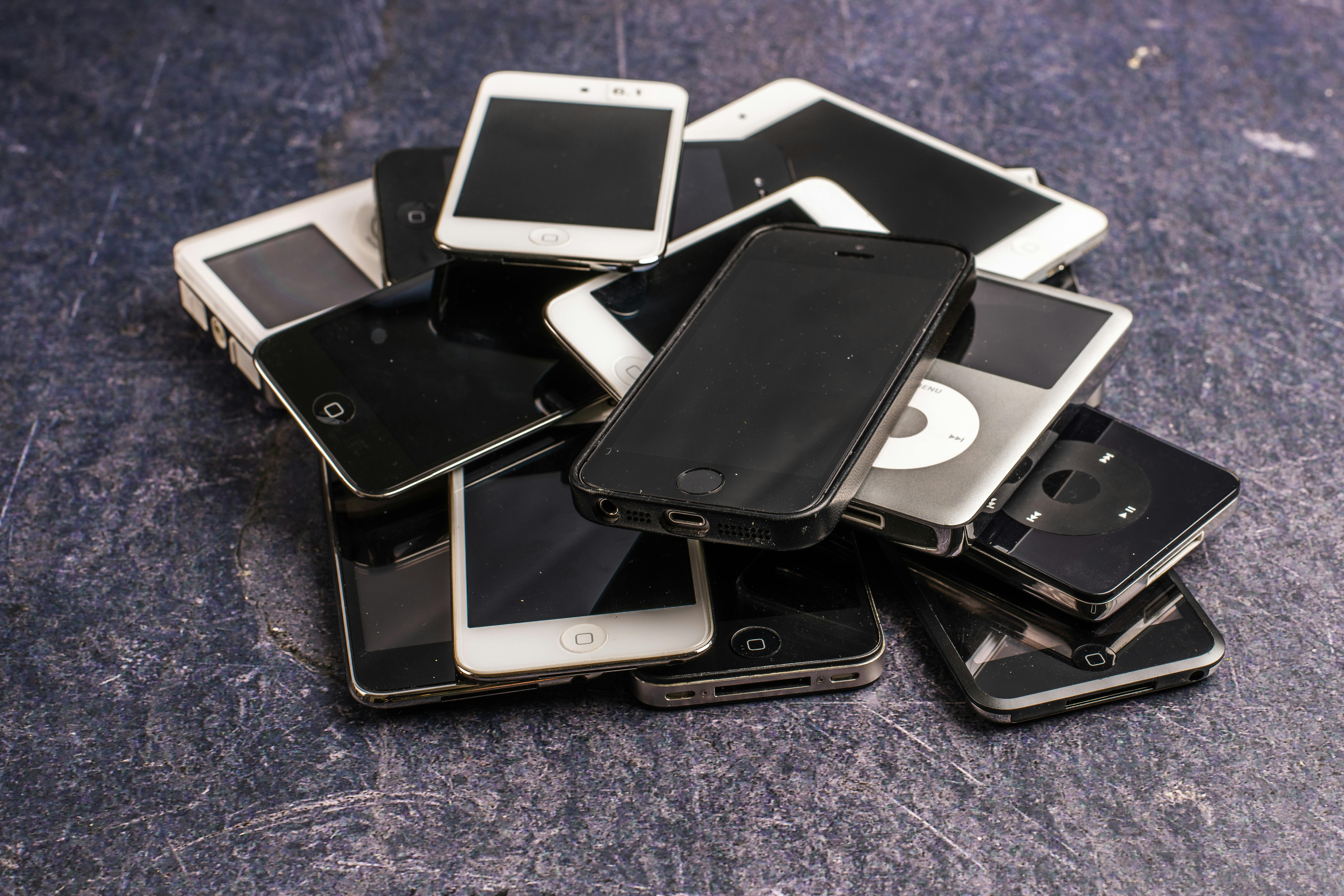
I recently went digging through a drawer of old gadgets, and this made me nostalgic towards my very first phone: a Sony Ericsson W550i. While I no longer have it in my possession, I imagine holding it next to the phone in my pocket today - a Samsung Galaxy Z Fold7 - would highlight just how much mobile technology has come along in the last two decades.
So I did some quiet analysis. What has my personal mobile phone journey been like? Eleven phones, with release dates from 2005 to 2025. The thing that surprised me most: how the pace of change has changed from “unrecognisable every year” to “honestly, this is just last year’s phone but in a different colour”.
The feature-phone years (2005 - 2009)
Look at the top of that list and you’ll see that half the specs are missing. Nobody quoted RAM or clock speed back in 2005, because nobody cared. The questions that mattered were “how many songs fit on it? Can I send an SMS? Can I call someone?”. The W550i was all about that Walkman button, a physical shortcut straight to your music. By the time the Nokia X6 arrived with a touchscreen and a colossal 32 GB of storage, “your phone is your music player” was the main feature.
Smartphones arrive on the scene (2010 - 2011)
This era was the first big shift in smartphones. The iPhone 4 launched with a display so sharp you couldn’t see the pixels (allegedly), the Galaxy Ace made Android affordable for everyone, and the iPhone 4S introduced Siri and the strange new idea of talking to your phone. Suddenly, 512MB of RAM felt limitless, and the thing in your hand stopped being a phone that did a few extra tricks and became a small computer that happened to make calls.
The flagship golden age (2014 - 2016)
Golden age is correct. Each phone launch was a massive event, with everyone looking forward to the wacky innovations that each company was bringing to the table. The Xperia Z1 Compact packed flagship power into a small, waterproof body. The LG G4 paired a proper enthusiast camera - f/1.8 with a full manual mode - with expandable storage. The Galaxy S7 Edge curved the screen around the sides and brought back water resistance and the microSD slot. In three short years RAM doubled from 2 GB to 4 GB, screens jumped to razor-sharp QHD, and cameras leapt forward every spring. Each phone was recognisably different from the one before it.
The modern era (2019 - Present)
The OnePlus 7T made 90Hz screens normal, the Xiaomi 13 brought Leica tuning into a neat flat-edged flagship, and the Z Fold7 folds in half. All brilliant - and, on paper, wildly more capable than anything before them.
The climb
Twenty years is easier to feel as a picture. Here’s some key specifications plotted as a multiple of where it started, across all eleven phones. Watch the camera line in particular and notice the one line that barely lifts off the floor:
A comparison between the W550i and the Fold7:
- Storage: 256MB, versus 512GB - roughly 2,048 times more room.
- Camera: 1.3MP, versus 200MP. Now supports 8K video recording at 30FPS.
- RAM and processor: the W550i never even published these. The Fold7 has 12GB of memory and an eight-core SoC that is thousands of times more powerful than a 2005 laptop.
- Connectivity: the W550i didn’t even have Wi-Fi, and only had 2G. Compare that to the Fold7’s Wi-Fi 7 and 5G support.
In a nutshell: the W550i could hold maybe a dozen songs. The Fold7 in the same pocket holds my entire music library (well not really with the age of music streaming, but that’s a different story…), thousands of photos, every possible app I could ever need, and could comfortably run a small server.
The leaps have flattened
Here’s the strange part. Every line on that chart keeps climbing - the numbers never actually stopped. And yet the phones themselves feel more alike than ever. A 2005 phone and a 2010 phone are night-and-day; 2010 against 2015 is still a big jump. But line up the flagships of 2023, 2024 and 2025 and you’d struggle to tell them apart without the logos.
The reason is that we’ve reached a new steady state. Super fast, sharp enough, lasts a day on a single charge, fast charges in 30 mins, takes a great photo - once these were solved, another 30% on a benchmark didn’t change how the phone actually feels. It has, however, changed how I buy a new phone. I used to replace a phone every two or three years because the old one genuinely felt slow; now a three or four year old phone is still excellent for day to day tasks. My jump to the Fold7 wasn’t because the Xiaomi 13 couldn’t keep up - it absolutely could - it was because I wanted a screen that folds.
Where it goes next
In a lot of ways, SAP Integration has followed a similar trajectory. SAP XI, then PI, then PO, CPI, Integration Suite. The innovation graph changed shape dramatically every few years: dual-stack to single-stack, on-premise middleware bristling with adapters and process orchestration. Then the whole thing moved to the cloud as Cloud Platform Integration, and now SAP Integration Suite on BTP. The early steps were big architectural changes; today the releases are steadier - a new adapter here, more pre-built content there, a sprinkle of AI. Same story as the phones: a transient state giving way to a new steady-state.
So I’ve stopped waiting for the next big spec bump, in my pocket or at work. The real change won’t be a faster engine - it’ll be a different shape: a screen that folds, an IFlow that builds itself, software doing things we haven’t thought to ask for yet.